Hair PRP (Platelet-Rich Plasma) is an advanced and minimally invasive treatment that uses growth factors present in the patient’s own blood to stimulate scalp regeneration and follicular health. It is especially indicated for those suffering from hair loss, hair thinning, or seeking a complementary solution to hair transplantation.
This treatment uses a platelet concentrate (PRP) extracted from the patient’s own blood, rich in regenerative proteins that strengthen the roots, increase hair density, and prolong the active growth phase of the hair cycle. The application of PRP stimulates the hair follicles, promoting healthier and more structured growth. It is a safe and effective approach for both men and women.
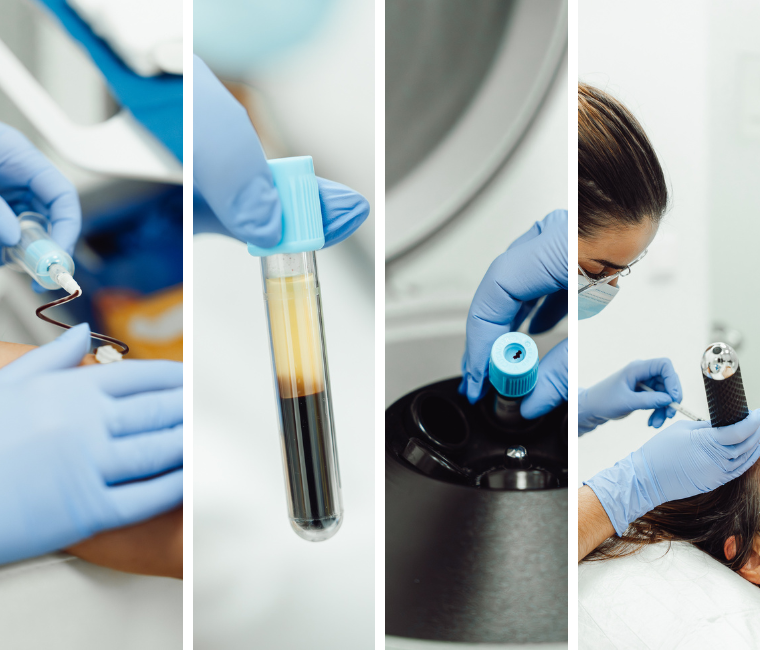
Hair PRP treatment consists of three stages:
3.Application of PRP through microinjections in the scalp.
Sessions last between 30 and 40 minutes. The recommended clinical protocol includes 5 sessions over 12 months: 1 per month for the first 3 months, then at months 6 and 12.

PRP is a natural, safe, and personalized solution, as it uses the patient’s own plasma rich in growth factors. Its effects are well recognized both as a stand-alone treatment and as a complement to hair transplantation.
Key benefits include:
This treatment stands out as an effective option for those seeking to improve hair health without medications or invasive procedures, or as clinical support after hair transplant surgery.
Initial effects become noticeable 2 to 3 weeks after the second or third session, with visible improvements in hair shedding and overall texture. Results last for several months, with maintenance sessions recommended depending on clinical progress and the patient’s lifestyle.
Although non-surgical and well-tolerated, the treatment requires simple post-care:
At IDC.Clinic, we ensure thorough medical evaluation from the first consultation. If you are considering improving your hair health, schedule your consultation — we assess your scalp, investigate possible causes of hair loss, and design a treatment plan tailored to your needs.
Take a look at our patients’ experiences in the clinical case gallery – and discover what you can achieve with the right PRP plan.
Results
PRP shows good results in cases of androgenetic alopecia (hereditary hair loss) and telogen effluvium (diffuse shedding). However, not all causes of hair loss respond well to this treatment. Medical evaluation is essential to determine clinical suitability.
Hair PRP is contraindicated in patients with hematological disorders, active infections, uncontrolled autoimmune diseases, a history of blood cancers, coagulation disorders, or those on anticoagulant therapy. It is also not recommended during pregnancy or breastfeeding.
It is generally well tolerated. The application is done via microinjections into the scalp, which may cause slight discomfort. A topical anesthetic may be applied for increased comfort.
As the product is autologous (from the patient’s own blood), the risk of rejection or allergic reaction is minimal. Redness, slight swelling, or bruising at the treatment site may occur, usually resolving within a few days.
No. PRP can help prevent and slow down hair loss, but it does not create new follicles in areas where they no longer exist. In advanced baldness, a hair transplant remains the definitive solution.
Yes. PRP is highly recommended after a transplant, as it accelerates healing, reduces inflammation, and improves nourishment of the implanted follicles, enhancing long-term results.
PRP stimulates growth and strengthens existing hair, while hair transplant redistributes follicles from donor areas to bald regions. The two treatments can be complementary, enhancing long-term outcomes.
Each session lasts 30 to 40 minutes. The standard protocol includes 5 sessions: 3 monthly sessions, one at 6 months, and another at 12 months. Frequency may be adjusted according to clinical response.
Initial signs of improvement (such as reduced shedding or shinier hair) appear between the 2nd and 3rd sessions. New hair growth and increased density become more evident between the 4th and 6th month.